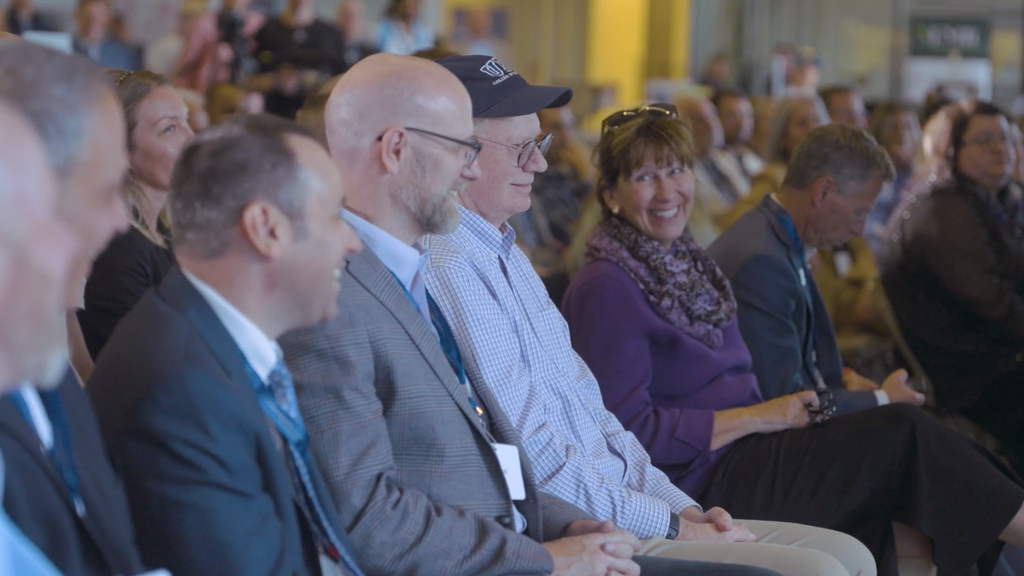
Jon Soderstrom noticed the difference before the Tech Showcase even began.
When the founder of Yale Ventures arrived early for the first URI Tech Showcase in 2025, he remembered a room that was still relatively quiet. A year later, he walked into Toray Commons and found himself raising his voice over conversations already underway.
“That’s a great sign,” Soderstrom told the crowd.
The energy reflected how much had changed in a year.
On Sept. 22, URI Innovations brought ten research-driven technologies and ventures together for the second annual URI Tech Showcase, part of Rhode Island Startup Week, powered by RIHub. The work on stage ranged from early university research seeking its first commercial partners to URI spinouts already raising capital, licensing technology, and generating revenue.
Discovery, connection, and impact have shaped the Showcase from the beginning. This year, all three were visible in the room.
Discovery starts with a problem worth solving
For several of the innovators on stage, their work began with a problem they had experienced themselves.
Chelsie Santos built the foundation for FinSight Intelligence while studying finance at URI. Working full-time and living off campus made it difficult for her to regularly access tools such as the Bloomberg Terminal. What began as a way to solve her own problem became an AI-powered financial research and learning platform now being piloted at URI.
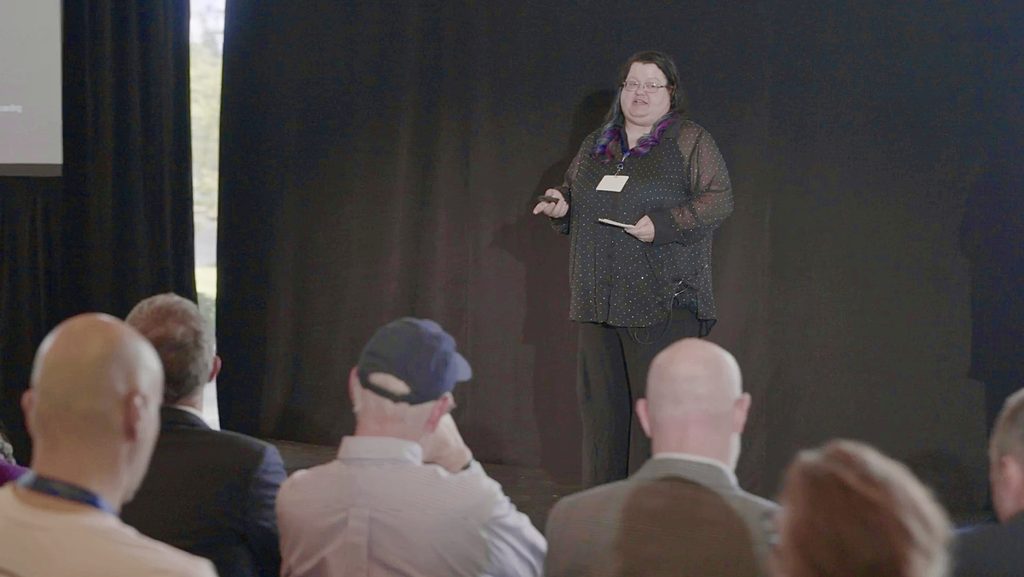
“I started FinSight because I needed access to financial data outside of school and off campus,” Santos said. “And now I want more students to have that opportunity.”
Registered nurse Sarah Waimon’s idea started with a moment she would rather not repeat.
During a shift on a colorectal unit, she used a hospital bedpan washer and got what she described as a “splash right to the face.”
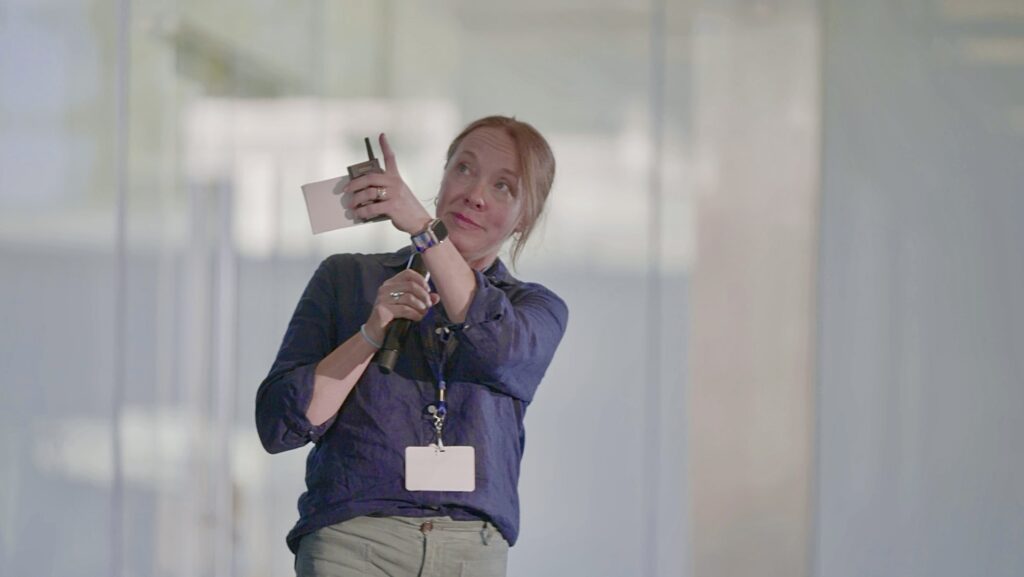
“After some four-letter words, a few tears and, of course, a really good face scrub,” Waimon told the audience, “I started thinking about how to make sure another caregiver would not have the same experience.”
That idea became Looey®, a clear splash guard that connects directly to existing bedpan-washing equipment. Today, Looey is patent-pending and has raised its first $200,000, with more than half of that investment coming from nurses. Tooling is complete, and Waimon said Looey will be manufactured in Rhode Island in partnership with Mars Plastics.
Other discoveries started in URI laboratories.
Professor Daniel Roxbury’s lab is working to make a bandage do more than cover a wound.
His team has developed a textile embedded with optical nanosensors that can detect hydrogen peroxide, a biomarker associated with wound infection. The goal is real-time monitoring that could alert clinicians before an infection progresses. The URI team has secured a patent for the sensing textile and is also developing a portable reader for eventual use in hospitals and clinics.
“The support that we’ve received through URI Innovations has been instrumental in advancing Smart Bandage to the next stage in its development,” Roxbury said. “I was happy to be part of and present our team’s work at the URI Tech Showcase. The year-over-year growth of the event was impressive, and I am excited to see the pitches in years to come.”
“I don’t want a chemical feed system in my basement if I don’t have to.”
Professor Joe Goodwill used that example to explain a water-treatment problem faced by private well owners and other small systems. Traditional manganese treatment can work well at utility scale, but often depends on chemical-feeding equipment that is impractical for a home, church, hotel, or small community.
His lab is developing a self-regenerating treatment system that uses electricity to regenerate the filtration media instead. A prototype has already demonstrated a roughly tenfold reduction in manganese concentration at a power draw Goodwill compared to charging a cellphone. The technology is patent pending, and his team is now building a larger prototype as they work toward commercialization.
Each presenter who took to the stage on Tuesday night had only five minutes to summarize years of research, testing, and development.
Professor Rainer Lohmann used his time to challenge something deceptively simple: whether a single water sample can tell you enough about PFAS contamination.
“Depending on when you sample, you might be below the magic threshold, you might be above, or you might touch it,” Professor Rainer Lohmann explained.
Water concentrations can fluctuate over time, yet conventional testing often relies on samples collected at individual moments. Lohmann’s team has developed an integrative sampler that stays in the field for several weeks, producing a longer-term measurement that can give decision-makers a more useful picture of PFAS contamination. The next step is improving the device’s production, ruggedness, and analytical workflow so it can reach laboratories, consultants, and agencies doing PFAS work.
The next presentation remained focused on environmental risk, but shifted from long-term monitoring to decisions that may need to be made within hours.
CHAMP, led by Marine Affairs professor Austin Becker, is designed to give emergency managers more than a forecast. The Coastal Hazards Analysis Modeling and Prediction System combines hyperlocal predictions for flooding, wind, and waves with consequence thresholds — the hazard levels that could cause specific infrastructure to fail. That allows decision-makers to see which facilities are most likely to be affected and where action or resources may be needed before a storm arrives. Its dashboard is already in use at the Rhode Island Emergency Management Agency, and the team has also worked with Navy and Coast Guard installations, including projects involving sensitive, mission-critical infrastructure data.
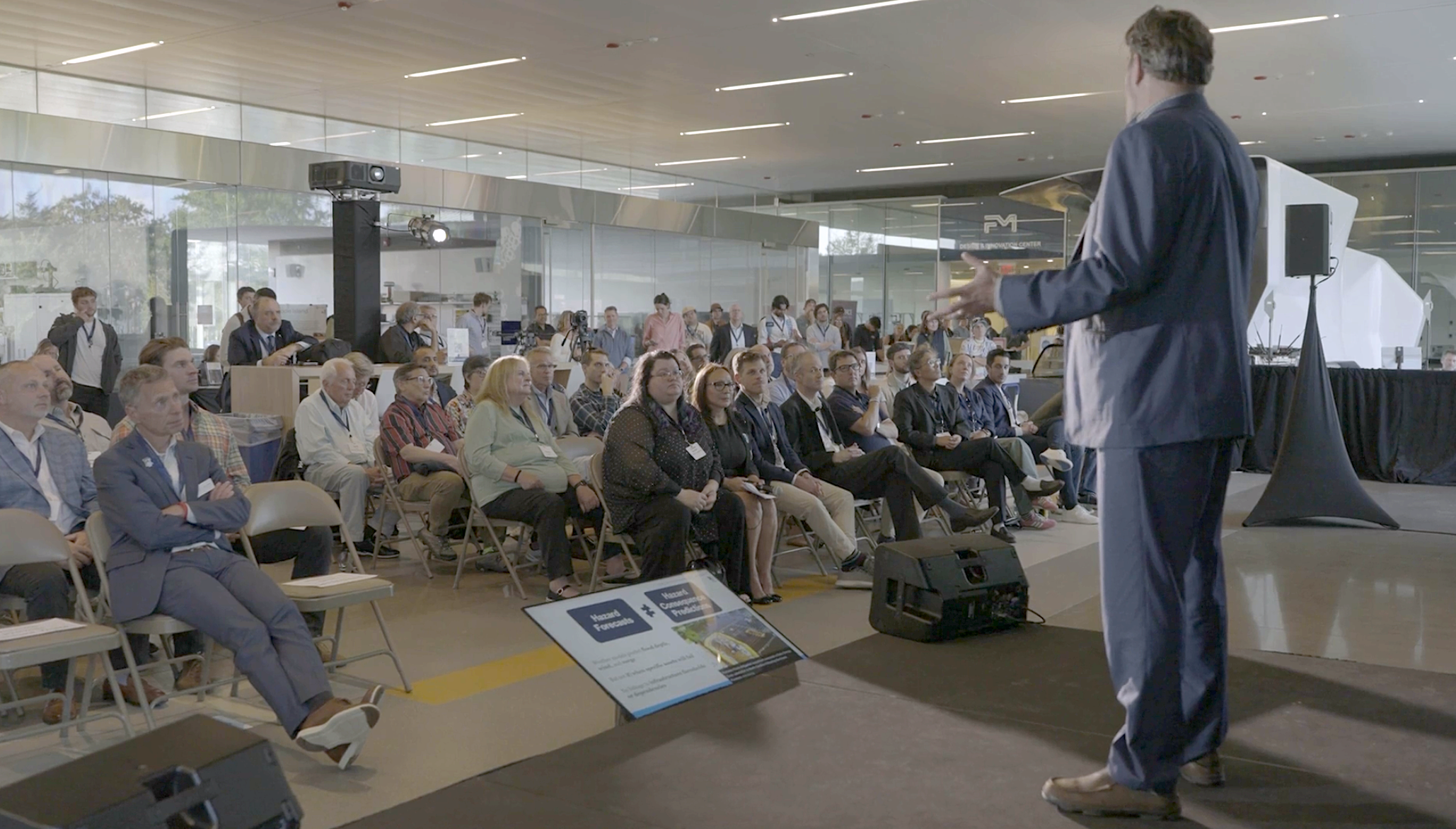
“The Tech Showcase gave us a chance to pitch that to investors and potential partners who think about how a research tool becomes something that can scale well beyond Rhode Island,” Becker said. “We’re grateful to URI Innovations for the opportunity and for its support as we figure out the next steps for CHAMP.”
The challenges changed again with NanoGlyph and Scedatrix, moving from coastal infrastructure into biotechnology and artificial intelligence.
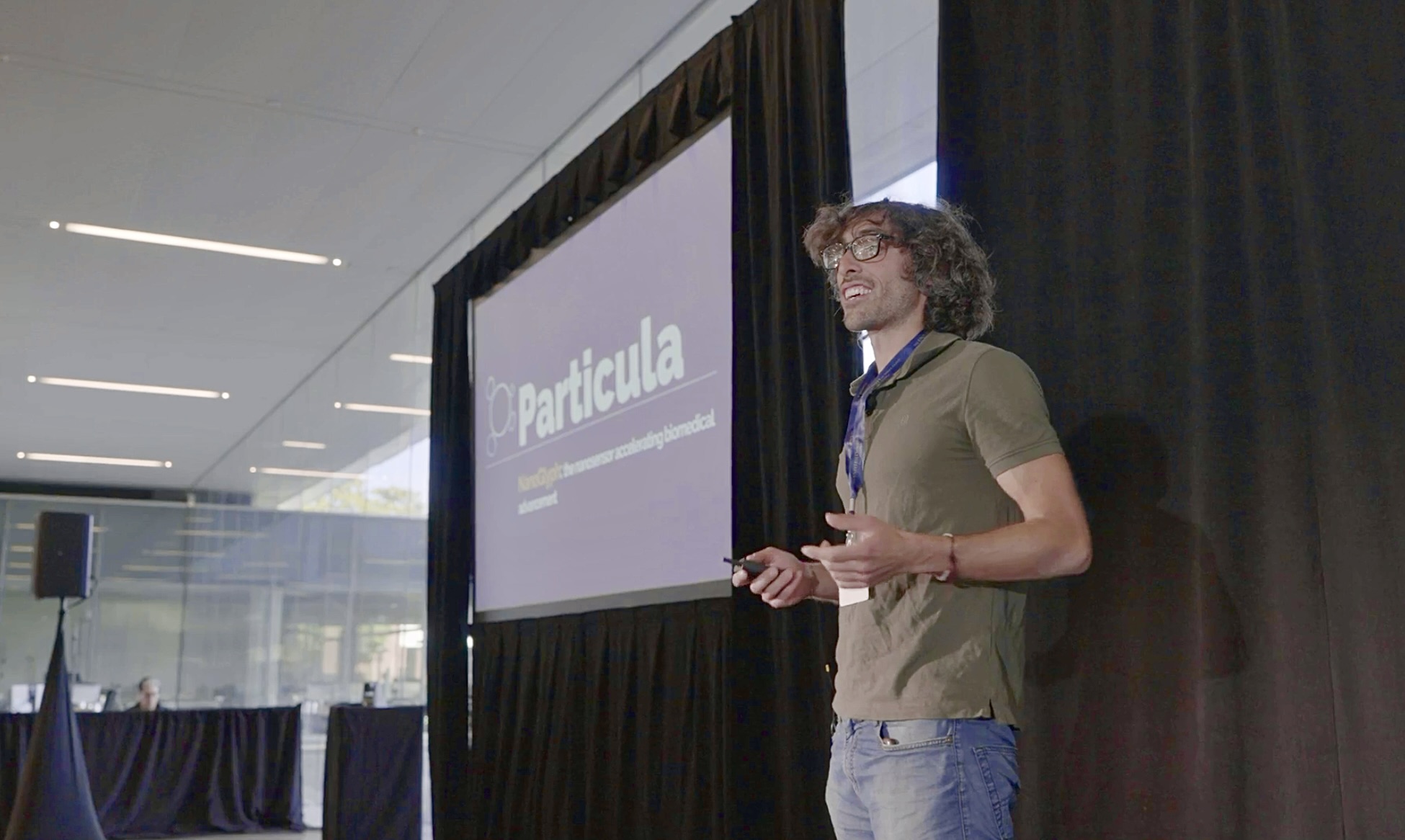
Riccardo Sirtori, M.D., Ph.D., founder and scientific lead of NanoGlyph, focused on a different bottleneck: the time and cost required to analyze experiments in biotechnology labs. The platform uses URI-patented nanosensor technology and is now moving toward validation with potential customers.
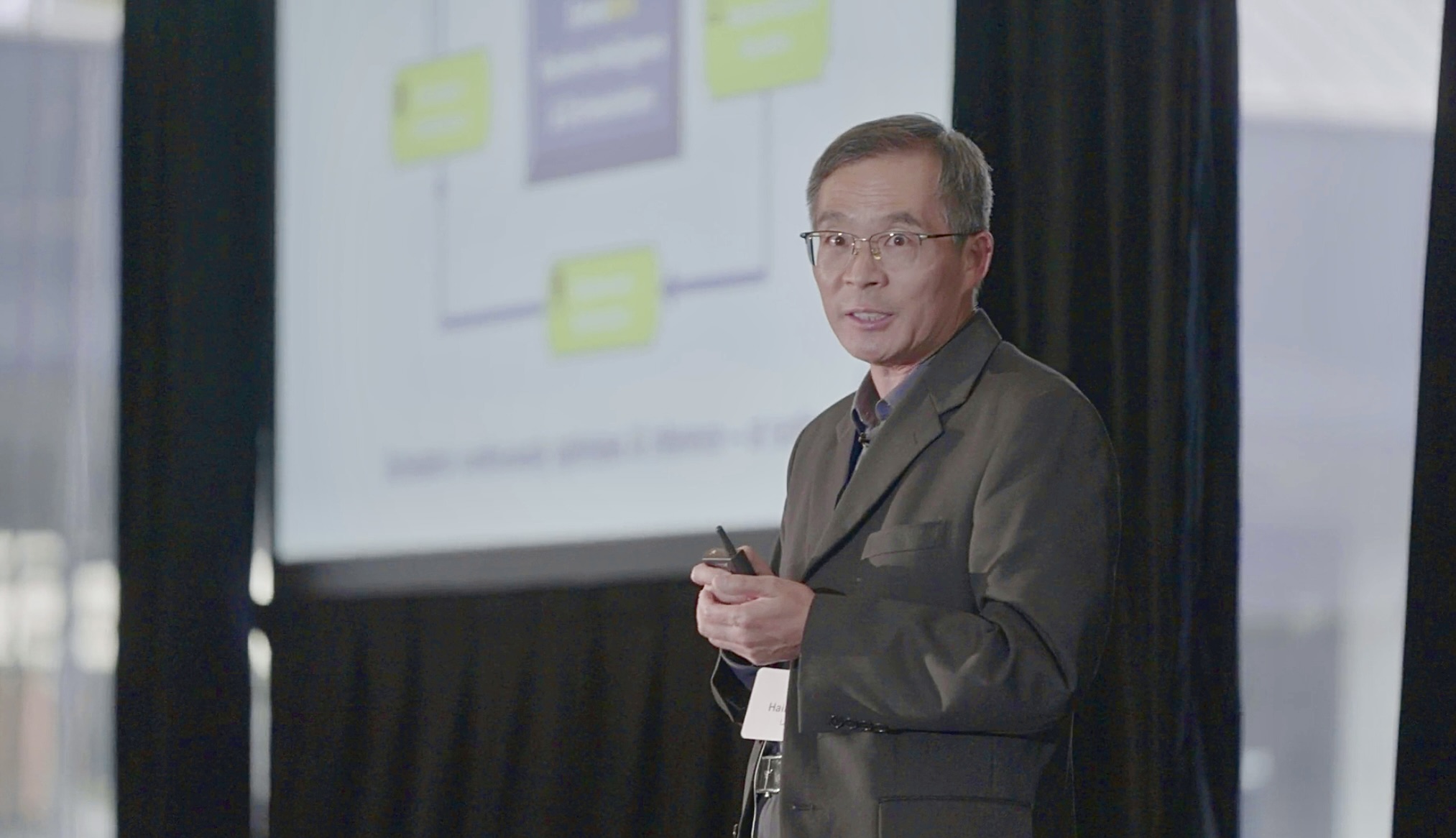
Haibo He, Ph.D., founder of Schedatrix, Inc. and Robert Haas Endowed Professor at URI, turned to the computing demands behind artificial intelligence. Schedatrix is being developed to make AI inference more efficient by matching computing resources more closely to the demands of individual workloads. The team has developed and tested an early system on real GPU hardware and is now seeking industry partners to validate it against real-world AI workloads.
What connected these ventures was not where they were in development, but that each had a next step — and, in many cases, someone they needed to meet to reach it.
The connections you make can shape what comes next
Several pitches ended with a request aimed directly at the people in the room. Some teams needed pilot partners or industry expertise. Others were looking for customers, advisors, or capital.
That emphasis on what happens after a discovery closely matched Soderstrom’s keynote.
He spoke about passion and perseverance as essential qualities for entrepreneurs, but argued that neither is enough on its own. “You need a team,” he said. No founder, researcher, or company builds something significant entirely alone.
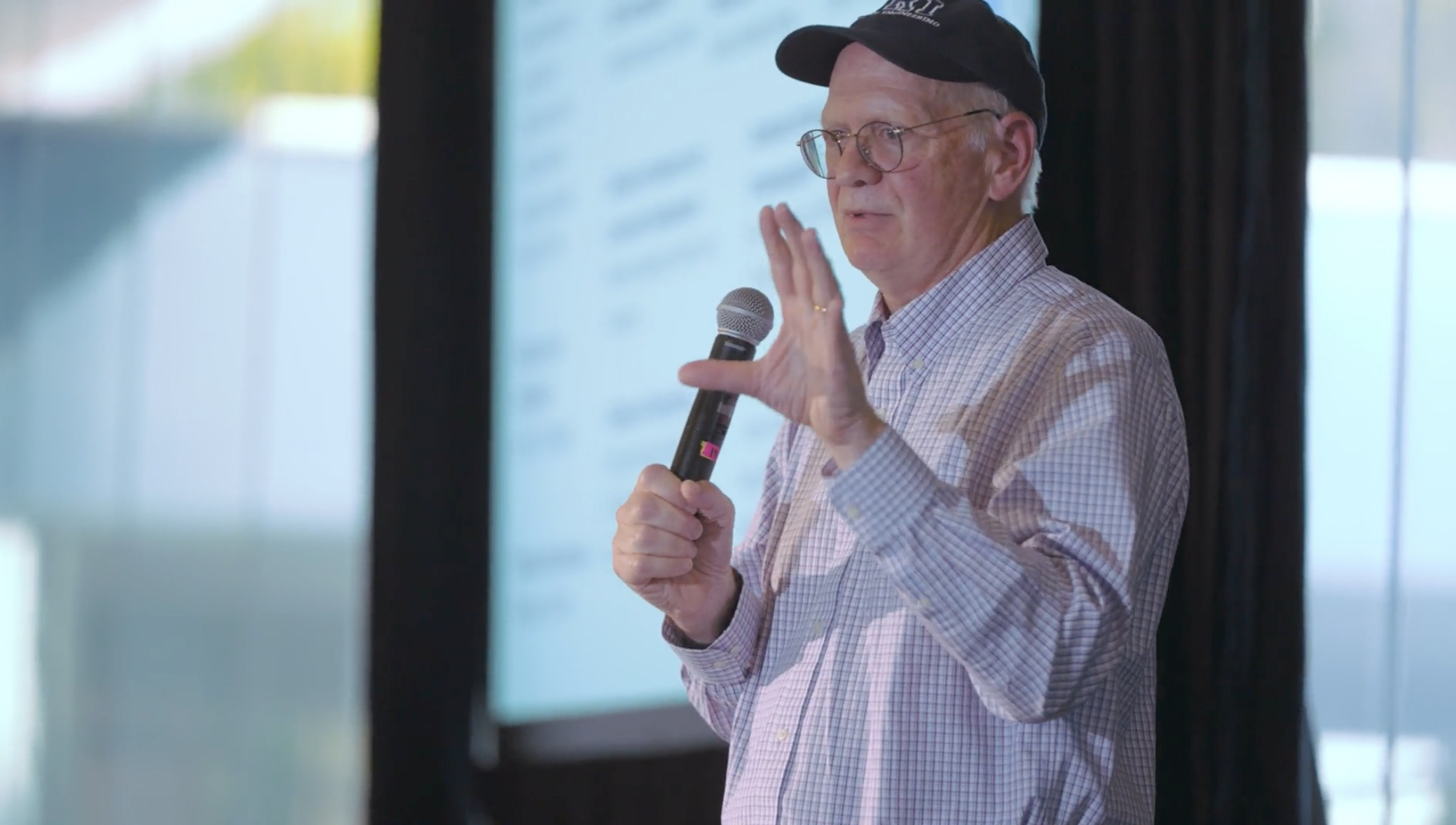
By the time he took the stage, the room had already begun demonstrating that idea. President Marc Parlange had opened his remarks by pointing to the “good noise and the good discussions” happening around him. Soderstrom later returned to the same observation, saying the network of people willing to help founders, researchers, and companies move forward was beginning to take shape.
“Success builds success,” he said. “It just does.”
A year later, impact returned to the room
The strongest evidence of what those connections can become came from companies that had reached major commercialization milestones over the past year.
At the beginning of the evening, Pete Rumsey, URI’s Associate Vice President for Economic Development, Innovation and Entrepreneurship and Operations Director for URI Innovations, used his remarks to highlight how much had changed since the inaugural Showcase. Among the signs he pointed to was a 46 percent year-over-year increase in invention disclosures at URI.
He then revisited a goal Jon Soderstrom had set at that first event: at least two significant venture funding events or exits within the following 12 months.
“One year later, I’m very pleased to share with you that we beat that target,” Rumsey told the crowd, announcing three: Juice Robotics, Trace Sensing Technologies, and FastFlowLM.
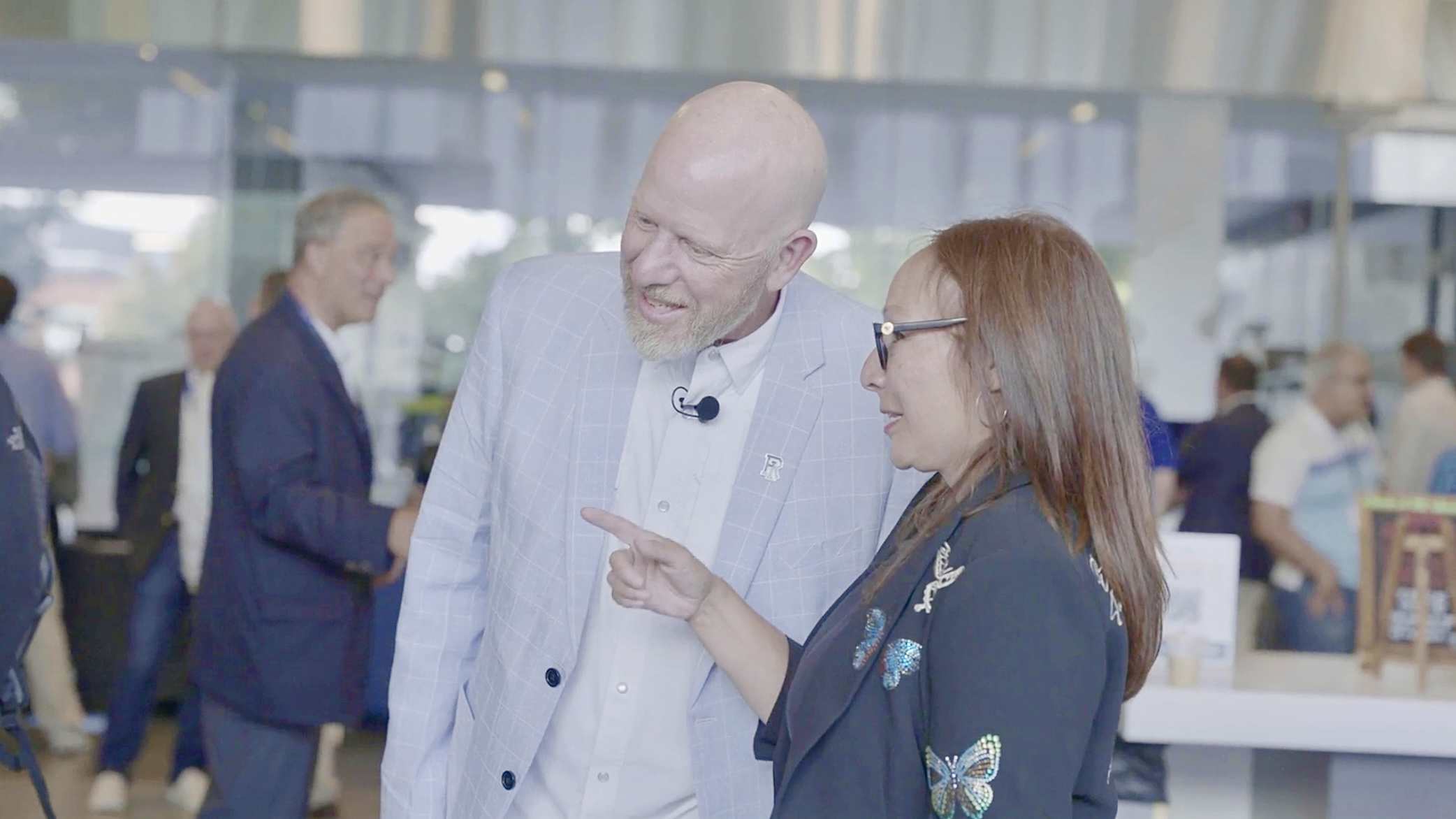
Juice Robotics
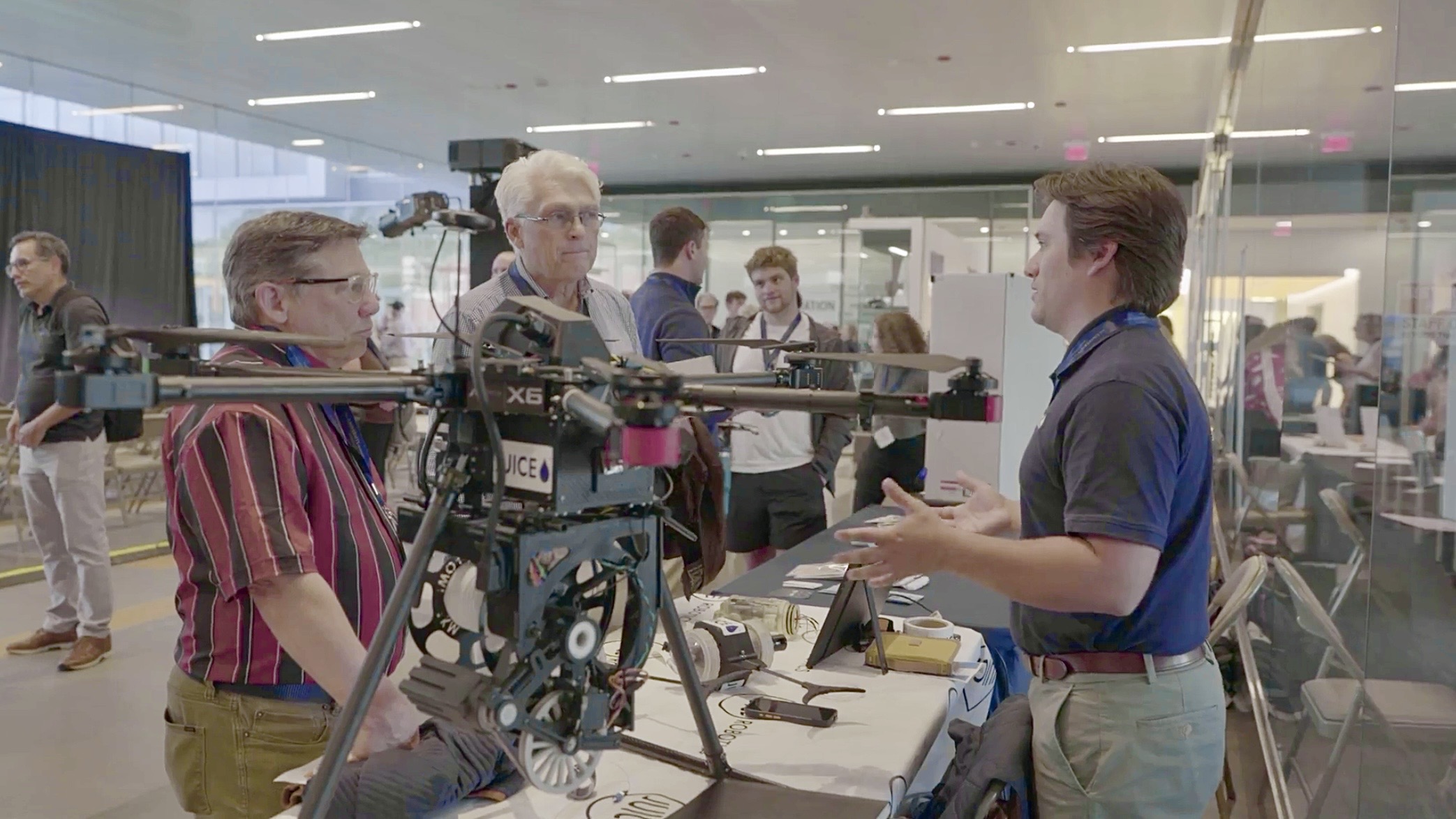
Juice Robotics offered the most direct connection back to the Showcase itself. The URI ocean technology spinout met Rogue Island Ventures through last year’s event and later secured investment from the firm, supporting commercialization efforts that include four licensed URI-developed technologies.
A year later, CEO Stephen Piper returned to the same stage with a different story to tell.
Juice is now post-revenue and raising a $1 million pre-seed round, which Piper said was 70 percent committed at the time of the Showcase. Just 48 hours before his presentation, members of the team had been in Iceland using the company’s High Dive system to lower a sensor 247 meters underwater while maintaining live communications. At BlueTide, the team reached another first by deploying the system from an unmanned surface vessel and took home the Catalyst Award.
Trace Sensing Technologies
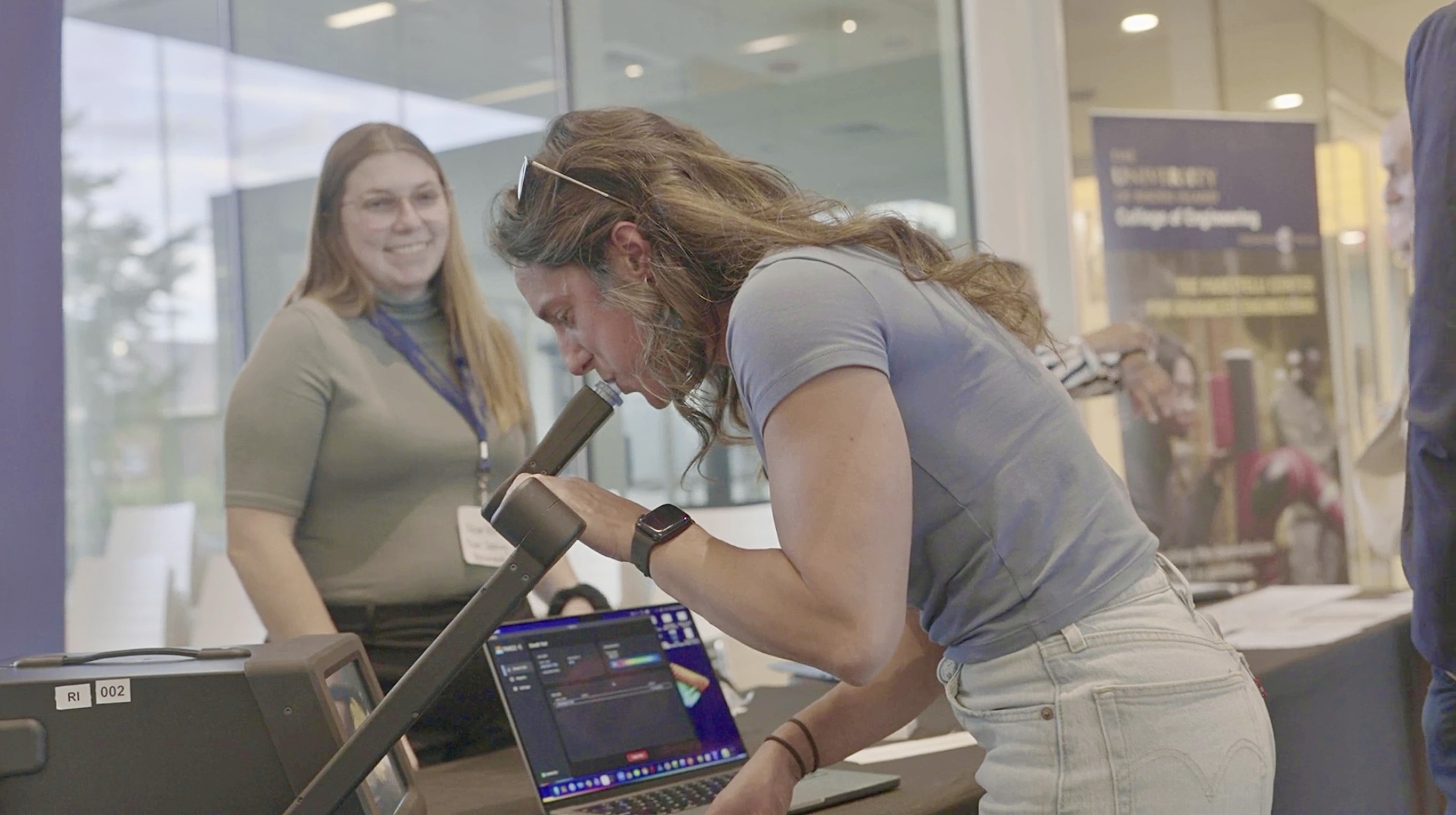
Trace Sensing Technologies returned with its own milestone. The URI spinout raised more than $2 million in Series Seed funding this year around TRACE-E, a breath-based diagnostic platform that grew from research conducted at URI.
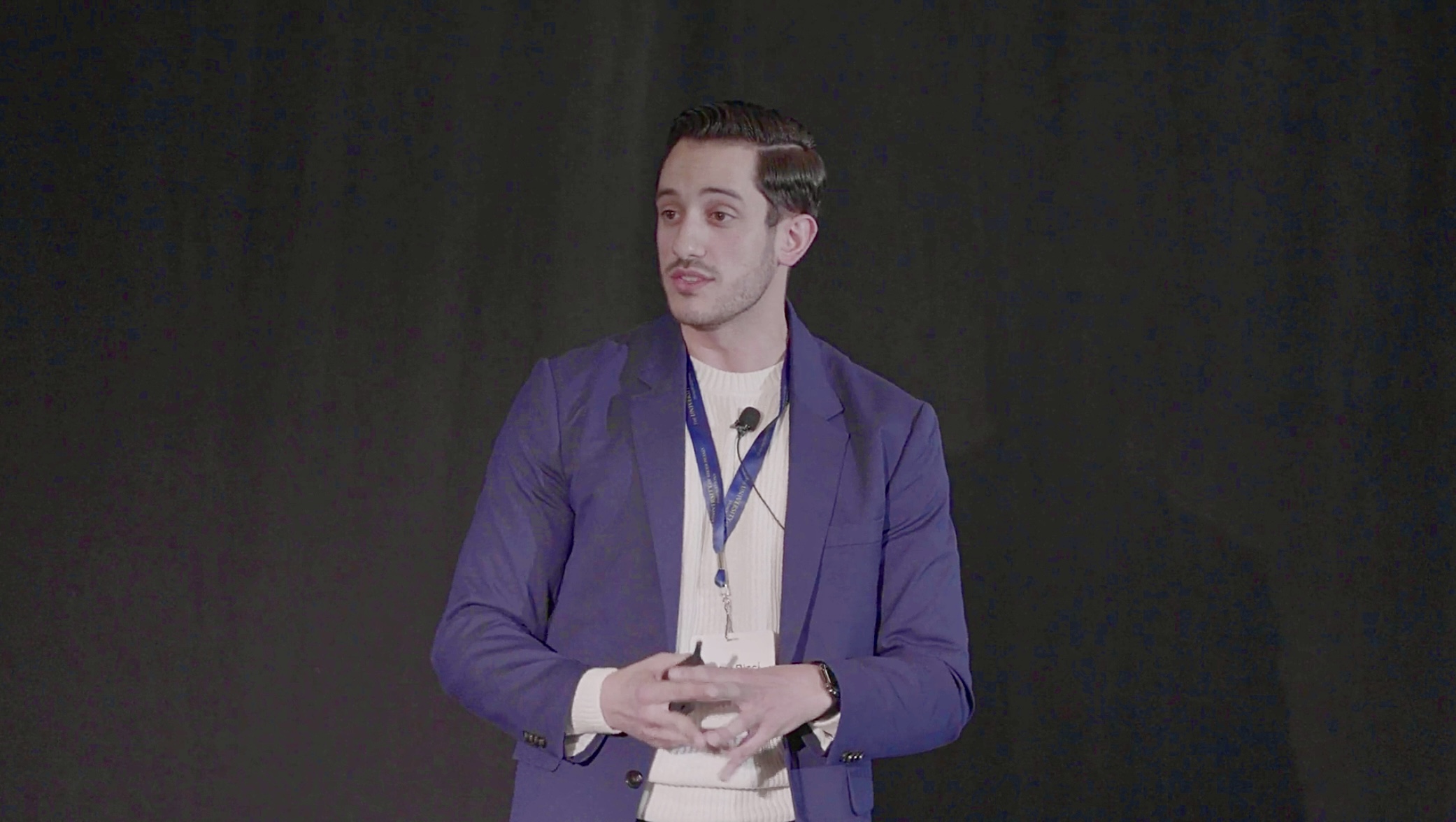
“Today I’m really excited to share our vision for better, faster, cheaper diagnostic and monitoring care using the power of your breath,” founder Peter Ricci said.
TRACE-E is being developed to measure disease biomarkers through a breath test and deliver results to clinicians in as little as 90 seconds. The company is now targeting a 2028 market entry for kidney disease and raising a $7 million Series A to support its next phase of clinical and commercial development.
FastFlowLM
FastFlowLM represented another path out of the university. Founded from work led by URI professor Ken Qing Yang, his graduate student team, and Clemson researchers, the company developed software to improve large-language-model performance. This summer, the FastFlowLM team joined AMD after licensing the technology, connecting technology developed at URI with one of the largest semiconductor companies working in artificial intelligence.
Together, those outcomes gave this year’s Showcase a different starting point. The event was no longer only about what URI research could become. Some of those trajectories were already visible.
“The goal isn’t just to celebrate those three successes,” Rumsey said. The larger challenge, he explained, is creating the conditions for the next 10 — and eventually the next 100.
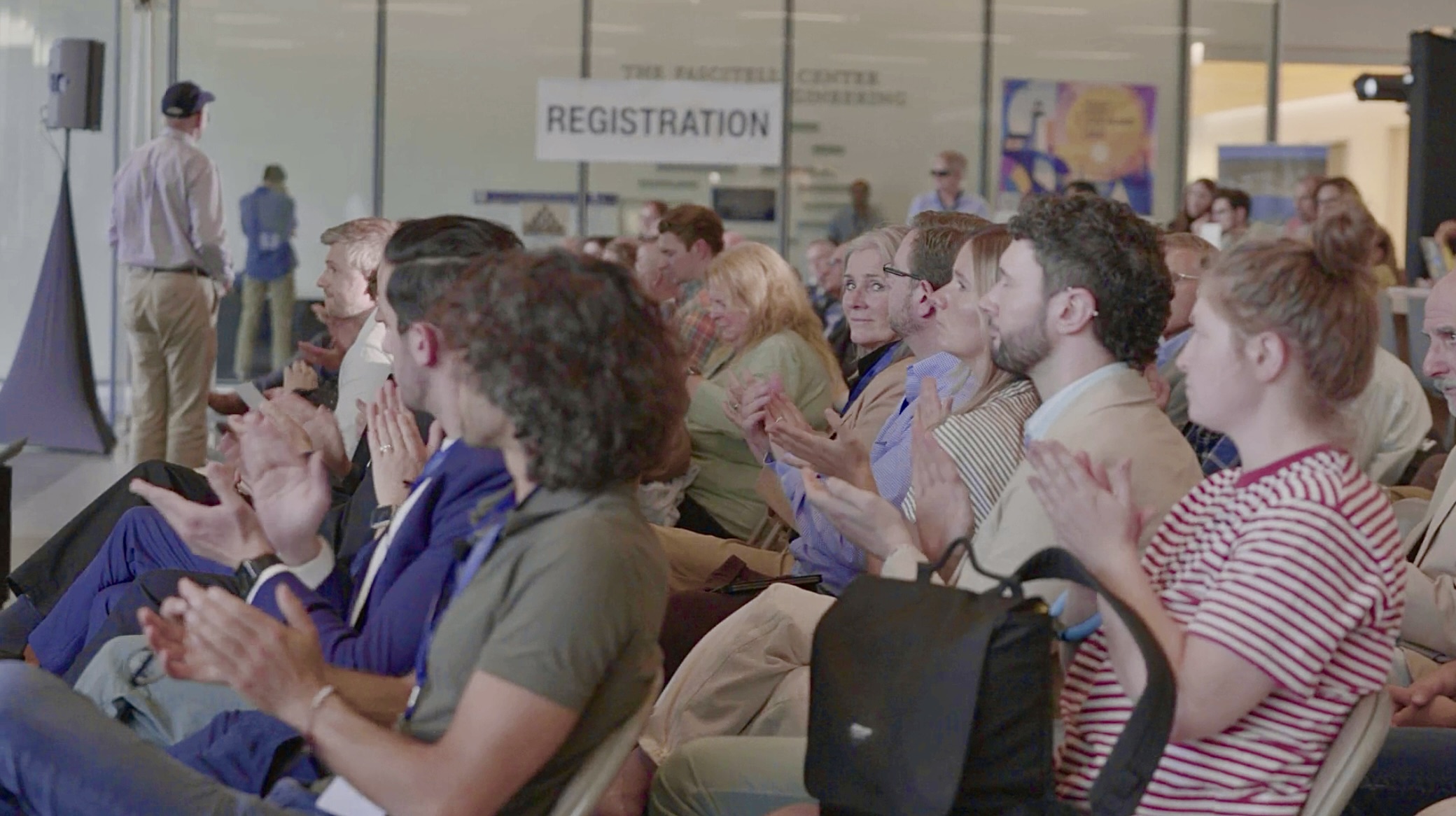
The Showcase gives researchers and founders a place to show what they have built, explain the problem it addresses, and make clear what they need to move it forward. It also brings them face-to-face with investors, industry partners, and advisors who may be able to help with that next step.
A video recap of the 2026 URI Tech Showcase is available here.
Read the Rhody Today press release here
About URI Innovations
The University of Rhode Island Research Foundation (URIRF) is the home of URI Innovations, the university’s hub for translating research into real-world solutions through innovation, entrepreneurship, and strategic partnerships. Through startup support, intellectual property management, industry engagement, and venture development programs, URI Innovations helps move URI discoveries from the lab to the marketplace – creating real-world impact, advancing economic development, and supporting the next generation of innovators. URI Innovations is operated by the University of Rhode Island Research Foundation (URIRF). Learn more at uriinnovations.org.
Additional Media Contacts:
Allison Markova
URI Innovations
allison_nangle@uri.edu
401-451-8578