
Trace Sensing Technologies, a University of Rhode Island spinout built around licensed URI intellectual property, has closed a Series Seed funding round of more than $2 million.
The funding marks an important step for TRACE-E, the company’s non-invasive diagnostic platform. TRACE-E identifies clinically meaningful disease biomarkers in exhaled breath. As a result, the platform could offer an alternative to tests that are invasive, expensive, or difficult to access.
The company’s first focus is chronic kidney disease. In this case, earlier detection could give clinicians more time to intervene and help patients manage the disease sooner.
Beyond that initial application, Trace Sensing is also evaluating TRACE-E in research involving Alzheimer’s disease, esophageal cancer, tuberculosis, and malaria. That work points to the broader potential of breath-based diagnostics. At the same time, the new funding will give the company more capacity to move the technology toward clinical use.
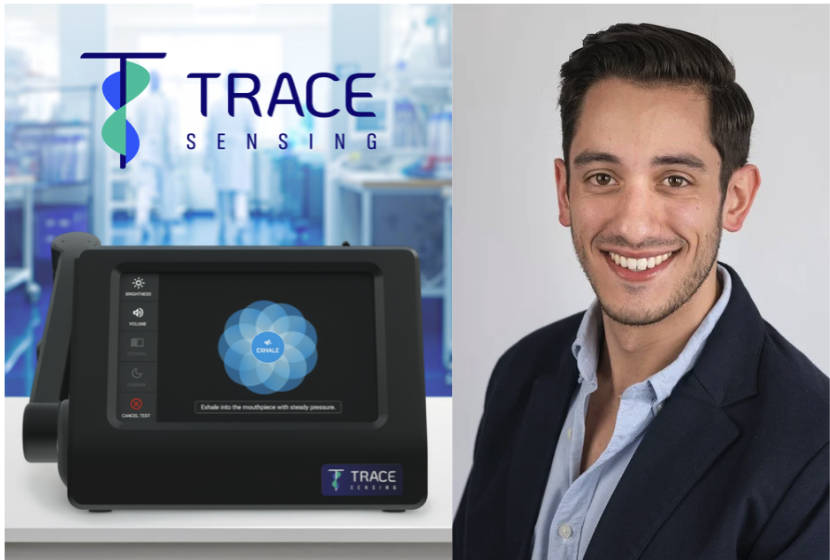
“This investment allows us to accelerate the clinical development of TRACE-E, beginning with chronic kidney disease, while advancing the key regulatory and reimbursement milestones needed to bring the technology closer to patients,” said Peter Ricci, founder of Trace Sensing Technologies. “It’s an exciting milestone for our team, and we’re incredibly grateful to our investors, collaborators, and everyone who has supported us along the way.”
Longtime partner Strain Measurement Devices led the financing. Angel investors and grant funding provided additional support.
The investment follows a period of steady progress for the company. Trace Sensing recently completed the second generation of the TRACE-E device and opened a new headquarters in Providence. Support from the Gates Foundation, the Rhode Island Life Science Hub, and Rhode Island Commerce has also helped advance its work.
Trace Sensing grew from technology developed at URI and licensed for commercial development. Its progress shows how university research can move beyond the laboratory through company formation, investment, and continued product development.
The latest investment gives the company additional resources to advance TRACE-E toward broader clinical applications.
Learn more about Trace Sensing Technologies and TRACE-E at tracesensing.com, and read the LinkedIn announcement.